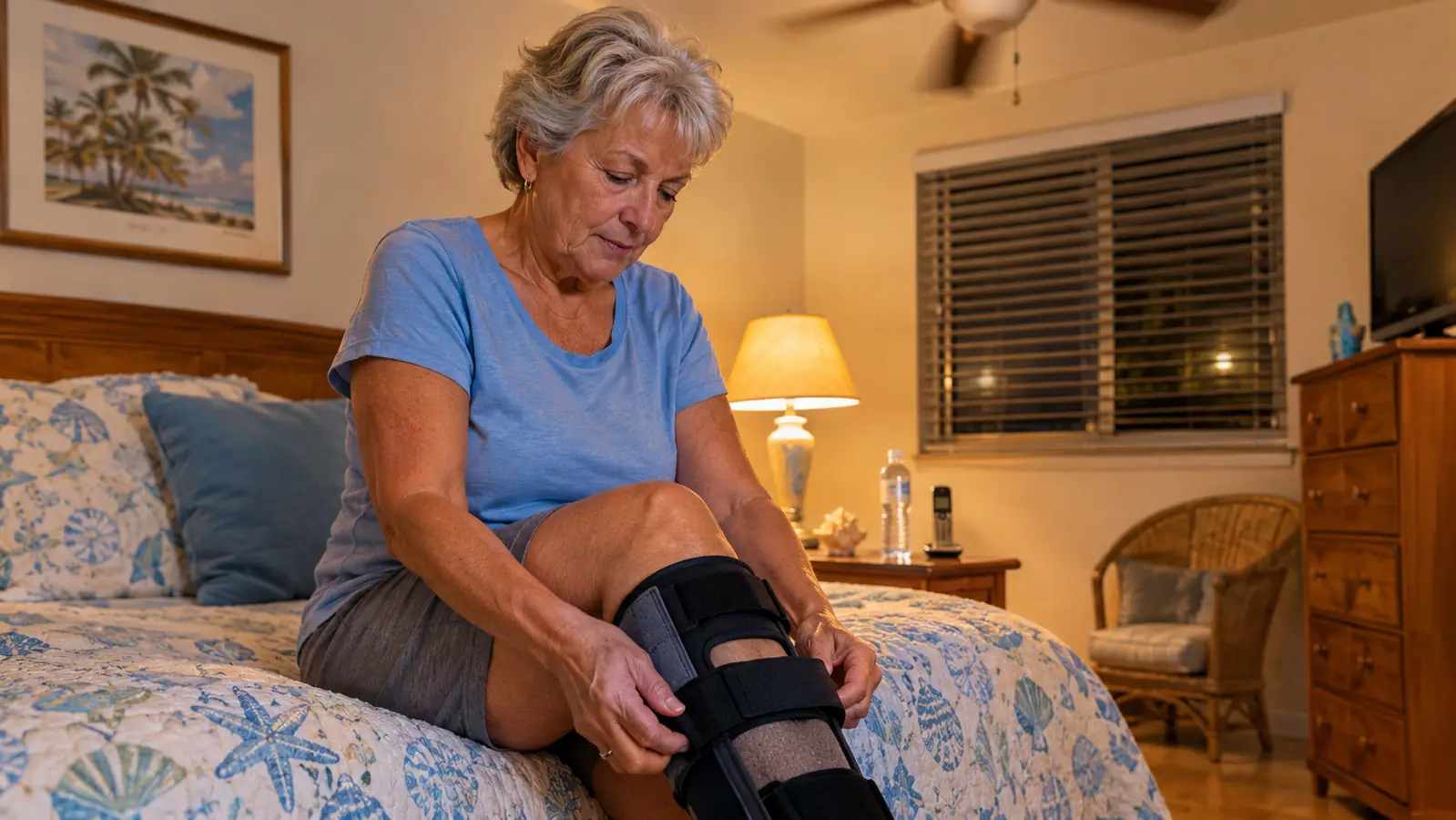
The first thing nobody tells you about a night splint is that you will not sleep like a baby in it. I want that out of the way before anything else. Before I bought the United Ortho brace last spring I read a long stack of reviews, and a good half of them made it sound like a spa treatment. Then I spent my first night in it wide awake at two in the morning, staring at the ceiling fan, wondering what I had talked myself into.
For the record, I am Carol Benning. Sixty-four, retired after thirty-one years teaching third grade, and these days I work three mornings a week as a cashier at a garden center on the Gulf Coast of Florida. That job is what started it. Concrete floors, eight hours on my feet, and by early 2025 my right heel felt like someone was tapping a tack into it every time I stood up. My doctor called it plantar fasciitis that spring and sent me to a physical therapist for six visits. She taught me the calf stretch and the towel stretch, and I still do both, most days, whether I feel like it or not.
The Quick Verdict
A sturdy adjustable stretch brace that does the one job it promises, once you survive four or five clumsy nights and accept that it treats your mornings, not the cause.
Amazon Check Today's Price →The brace I reach for on bad weeks, not every week
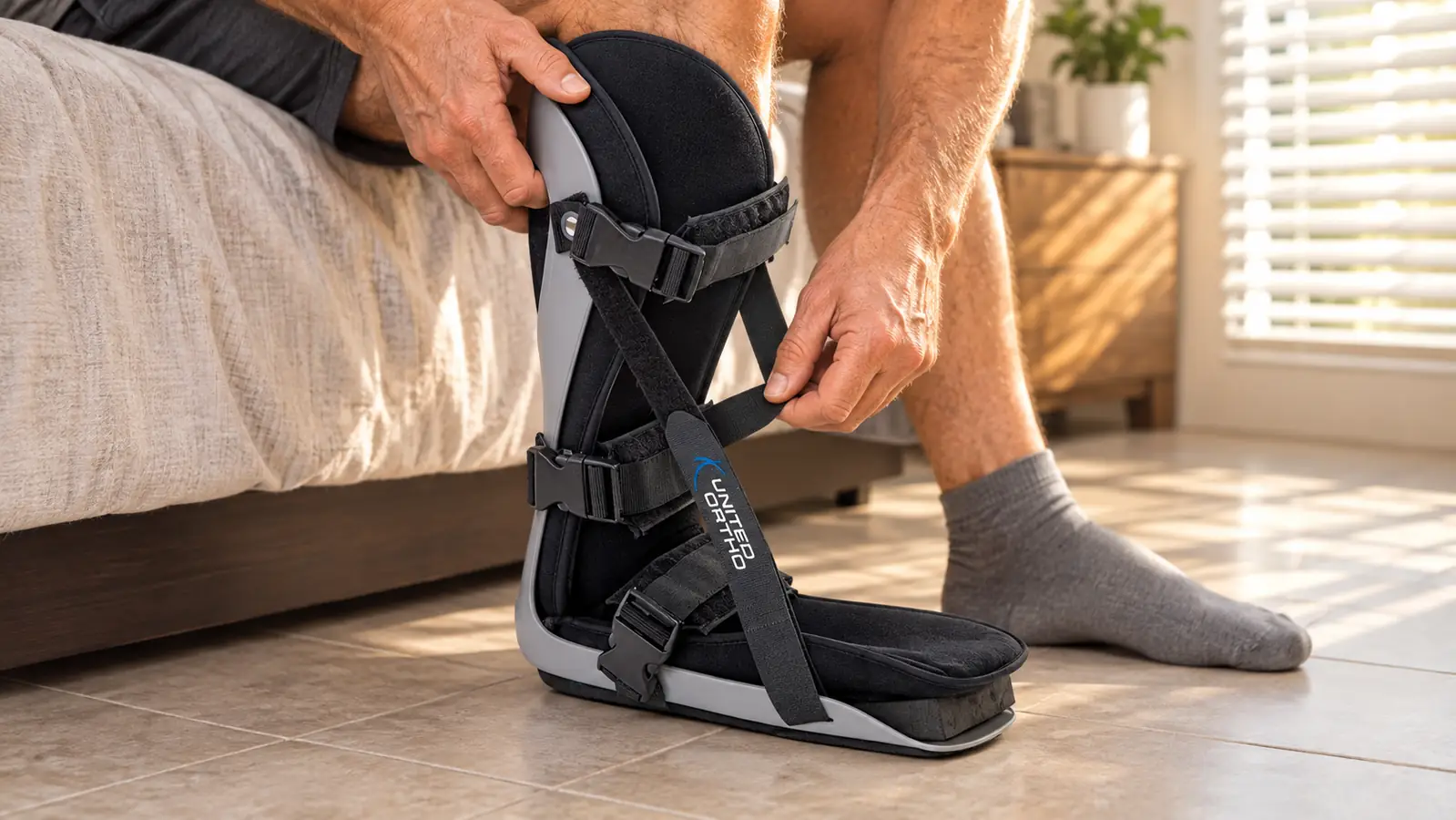
Adjustable from 10 to 90 degrees of dorsiflexion, foam lined, with padded calf and ankle straps. Measure your foot against the sizing chart before you order, because this is not something you can try on at a store counter.
Amazon Check Today's Price on Amazon →What the brace actually does is simple, and I like that about it. Flexion straps pull the toes gently back toward the shin while you sleep, holding a stretch on the plantar fascia and the Achilles tendon instead of letting both tighten up overnight. That is the whole idea. When I get up in the morning the first ten steps are a dull ache instead of the hot stab I used to get, and on the mornings after I skip it I can feel the difference before I reach the bathroom door.
How I Actually Use It
My routine on a bad week looks like this. Around nine I do the towel stretch on the edge of the bed, then I sit on the couch and roll my right foot over the BESKAR roller for a few minutes while Ray watches the news. Then I put the brace on. I do it sitting down, foot flat, straps loose, and I snug from the top down. If I rush it and cinch the ankle strap first, the whole thing rides up my calf by midnight and I am up at two fixing it.
My United Ortho is a Large. The listing says Large fits men's 9.5 to 11.5 and women's 10 to 12.5, and I wear a women's 10, so I sit right at the bottom of that range with room to pull the calf strap down snug. If you land between sizes, measure your foot the way the listing tells you to instead of ordering off your sneaker size. I nearly ordered the Medium out of vanity and I would have been mailing it back.
The padded calf and ankle straps are the parts I underrated, and the foam liner is the other one. I live in Florida, my house is tile from the front door to the back slider, and I expected a velcro contraption to turn into a swamp by midnight. It does not. The liner stays dry enough that I am not peeling the brace off at three in the morning, and the padding keeps the straps from cutting a groove into my calf. The listing gives the box at 15.5 by 11.5 by 5 inches and the brace at 1.2 pounds, which is about what a hardcover book weighs. It is not a feather on your foot. It is also not the anvil some of those reviews described.
The Angle Is The Whole Thing
The brace adjusts from 10 degrees up to 90 degrees of dorsiflexion. That range is the entire adjustable part of this product, and it matters more than everything else about it put together. Ten degrees is a mild pull, the kind you can fall asleep in without a fight. Ninety is a serious stretch I could not tolerate for an hour, let alone a whole night. My mistake was starting somewhere in the middle because I wanted results fast. I got a cramp in my arch at one in the morning and a sore calf for two days after.
What worked was starting near the bottom of that range and creeping up. A week at the low setting, then a notch or two more, then a week resting there. It took me the better part of a month to find the setting where I get a real stretch and still sleep. For me that is well under halfway up the range. Yours will be somewhere else entirely, and the only way to find it is to go slowly and pay attention to how your calf feels the next morning rather than how virtuous you feel at bedtime.
One thing I will say plainly: the strap setting is not a contest. I see people online announcing they sleep at the maximum. Good for them. I tried it once and ended up with my heel throbbing and my calf knotted, which is not what a stretch is supposed to do to you. The listing calls this range the optimum pain-relieving stretch, and the optimum is wherever you can stay for six or seven hours without a wrestling match.
What Nobody Tells You Before You Buy
Nobody tells you that you will fight it in your sleep. For the first four or five nights I woke up with my right foot tangled in the sheets and the brace half off. It gets better. Mine settled down around night six, once my body stopped treating the thing as a threat. But if you have a low tolerance for bad sleep and a heavy week coming at work, do not start the brace that same week. Pick a quiet stretch of days.
Nobody tells you that the sizing is the part most likely to go wrong. This is not a shoe. You cannot walk into a store on a Saturday and try three of them on. The listing is honest that you should measure your foot, and I would take that seriously, because the gap between a Large that fits and a Large that swallows your calf is a strap tension you cannot fix with cleverness.
Nobody tells you it is warm. It is foam and padding and a strap around your calf, and in a Florida August, with the ceiling fan going and the air conditioning doing its best, I have nights where I take it off at two in the morning purely because my leg is hot. I still think the foam liner is the right trade for the dryness it gives me. I would just rather you hear it from me in October than find out for yourself in July.
And nobody tells you that it does not fix anything. This is the big one. The brace holds a stretch while you sleep so your first steps are less brutal. It does not permanently lengthen a tight calf, it does not heal a strained fascia, and it does not replace the stretches, the right shoes, or the insoles. On the mornings after a day where I stood on concrete for six hours without my PowerStep insoles in, the brace cannot undo that. Nothing can.
Where It Falls Short
Three complaints, and I will be specific about them. First, this is not a walking device. You wear it in bed. If you get up in the night to use the bathroom, you are either taking it off or shuffling down the hall on a leg that was built for horizontal use. Second, the velcro is loud. Ray is a light sleeper and the sound of me adjusting a strap at midnight has become a running joke in this house.
Third, and this is the one that bothers me most, the foam will not last forever. Six months in, the liner on mine has gone soft and a little shiny where my heel sits. It still works. I can feel that it is not the brace I bought in the spring, though, and I expect to replace it inside a year. I would rather know that going in than feel cheated when it happens.
How It Compares To The Sock-Style Splints
I looked hard at the sock-style splints before I bought this one. They are softer, they fold flat, and from everything I read people tolerate them faster in those first few nights. What put me off was the stretch itself. A sock pulls back on your toes with whatever tension the fabric happens to have, and there is no setting, so you get what you get. With the United Ortho I can move the angle up over weeks, and when my calf is cranky I can back it off. For a sixty-four-year-old with a stubborn calf, that mattered more than comfort.
Where the sock wins is travel, and it is not close. We drove up to see our daughter Melissa in Atlanta in June and the brace took up a corner of the suitcase and made packing genuinely annoying. A sock would have folded into a ziplock bag and disappeared. If you travel a lot and you are not fussy about the exact angle of your stretch, a sock splint is a perfectly reasonable thing to own instead of this.
Six Months On Bad Weeks
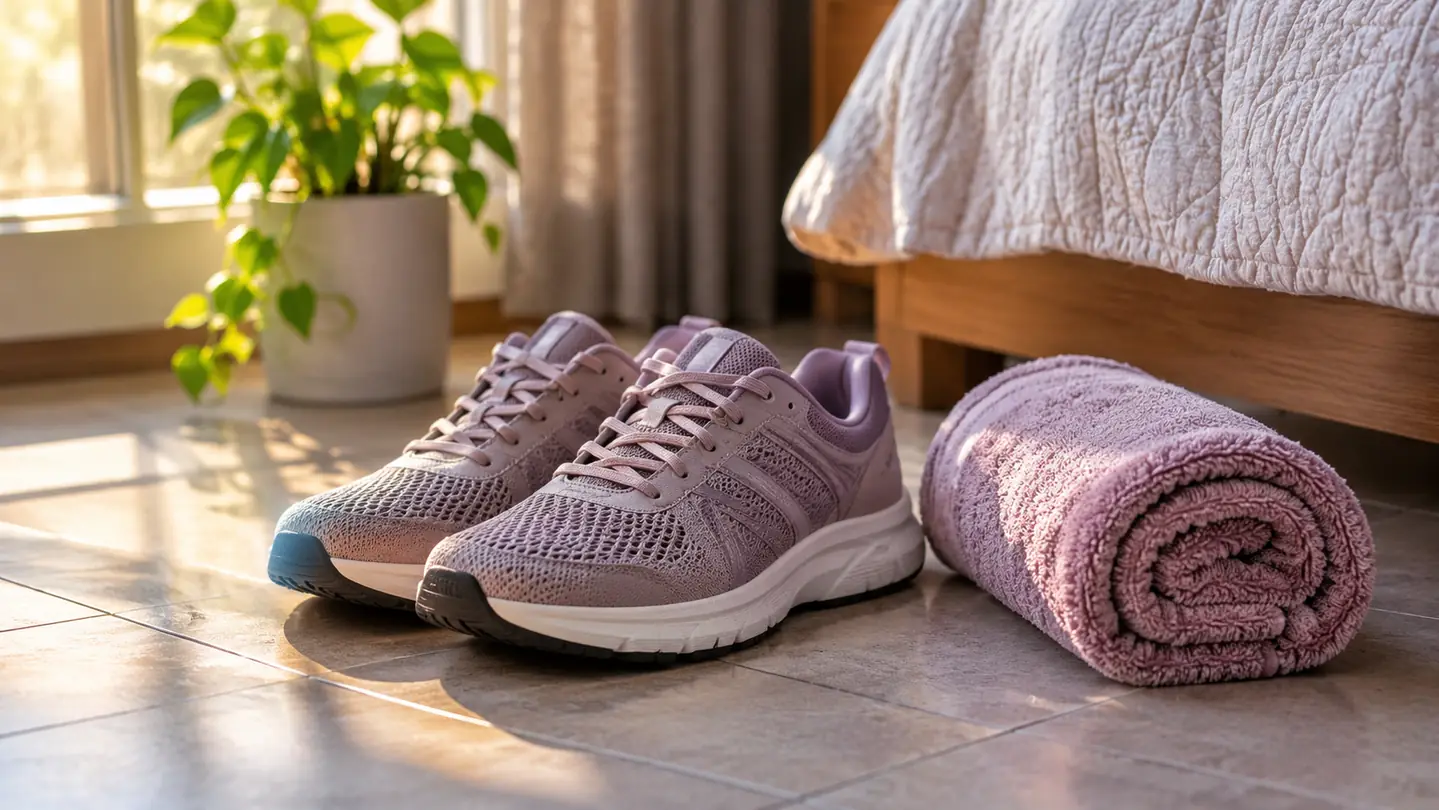
I want to be careful here, because I am not going to tell you this brace cured me. It did not. What it did was make the mornings survivable while the rest of the work, the stretching and the insoles and the shoes, did the slow repair. In the spring my first four or five steps out of bed were a sharp stab that made me grab the door frame. These days most mornings are a dull ache that loosens up in about a minute. I still have bad weeks. A stretch of humid days, a long shift, a morning where I skip the calf stretch, and the stab comes back to remind me.
The honest summary is that the brace is the tool I reach for on the bad weeks, not every single night. In a good stretch I might go four or five nights without it and pull it out only when my heel starts going tight again. That feels like the right relationship with a piece of equipment like this one. It is support, not a schedule, and nobody is grading you on how many nights you wear it.
What I Would Do Differently If I Started Over
If I could do it again, I would buy the brace on a week when nothing else was happening. I bought mine during the garden center's spring sale, which meant three early shifts in a row on about four hours of sleep, and I spent that entire week convinced the brace was a waste of money. It was not. I was exhausted and asking too much of one thing at once.
I would also start at the very bottom of the angle range on night one. Ten degrees feels like almost nothing when you first strap it on, and that is exactly the point. Give your calf a week of almost nothing before you ask it for more. The people who go straight to a big stretch are the people writing one-star reviews at the end of the first week.
And I would buy it knowing it is one piece of a bigger routine rather than the routine itself. The brace, the PowerStep insoles in my work sneakers, the roller by the couch, the OOFOS slides I wear on the tile instead of going barefoot, the stretches I do even on the days I do not feel like it. That combination is what changed my mornings. Any one of those alone would have been a disappointment, and I suspect that is true for most people reading this.
What I Liked
- Holds a real stretch overnight, which is what makes the first steps easier
- Adjustable angle from 10 to 90 degrees, so you can start gentle and work up
- Padded calf and ankle straps with a foam liner that stays dry
- Fits the right or the left foot, so a flare on the other side is covered
- Sizing is spelled out in foot measurements instead of guesswork
- Light enough at 1.2 pounds that it does not drag on the leg
Where It Falls Short
- Rough first week of sleep while you adapt to it
- Velcro is loud enough to wake a light sleeper in the same bed
- Warm on summer nights in a hot climate
- The foam liner softens and shines with months of use
- Too bulky to pack easily for travel
- It treats your morning pain, not the cause of it
My first four or five steps out of bed used to be a sharp stab that made me grab the door frame. Now most mornings are a dull ache that loosens in about a minute, and the brace is the reason the mornings changed first.
Who This Is For
This is for you if your worst pain is the first steps out of bed or the first steps after sitting through a long lunch, and if your doctor or physical therapist has already told you that a night stretch belongs in the plan. It suits people who can get through four or five clumsy nights in exchange for easier mornings, and people whose calf is tight enough that a stretch with a setting is worth more than a stretch that only comes in one tension. If you are on your feet all day, already doing the stretches, and already wearing decent insoles, this is a sensible next piece to add to the drawer by the bed.
Who Should Skip It
Skip it if your pain is sudden, severe, or in a different place than your heel and nobody has looked at it yet. Skip it if you cannot stand having anything on your foot at night, because no amount of angle adjusting will fix that. Skip it if you want something to wear around the house during the day, since this is a bed brace and nothing else. And if you have not done the basic work, meaning the stretching and the supportive shoes and the insoles, start there first. A brace worn on top of a worn-out pair of shoes is money thrown at the wrong end of the problem.
One brace, one foot, and a stretch you can actually sleep in
Mine has lived in the bedside drawer since spring. Measure your foot, start low in the 10 to 90 degree range, and give it a full week before you decide it is not for you.
Amazon Check Today's Price on Amazon →