
The first four steps out of bed are the whole story with plantar fasciitis. Mine felt like stepping on a stone that wasn't there, right heel, sharp enough that I would hold the doorframe and wait. It passed inside a minute. By lunch I forgot about it. Then the next morning it was back, same time, same spot, same stone.
That started in early 2025, a few months after I took a part-time job as a cashier at a garden center. I had retired from thirty-one years of teaching, and three mornings a week on concrete under a thin mat turned out to be a different kind of tired.
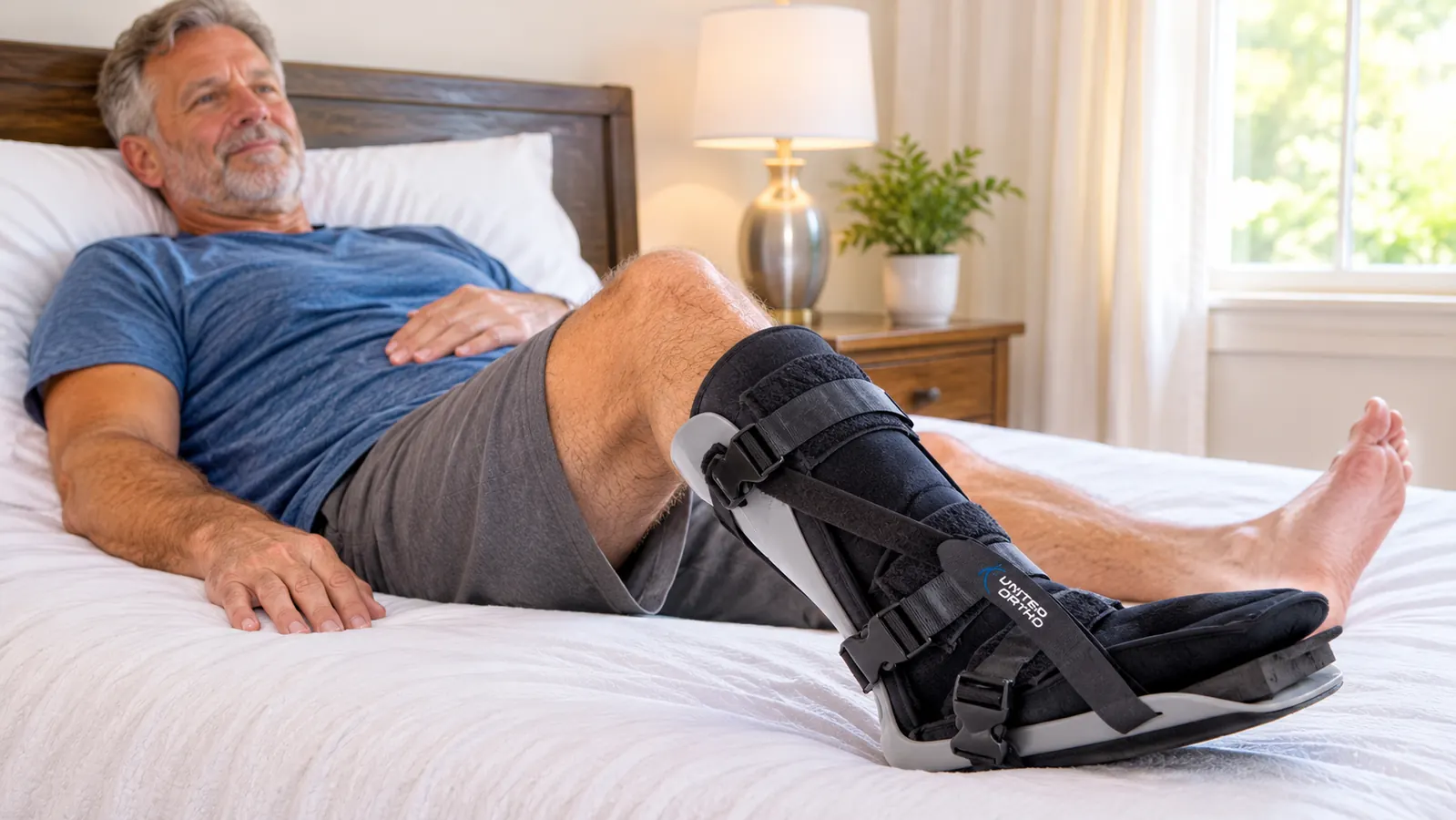
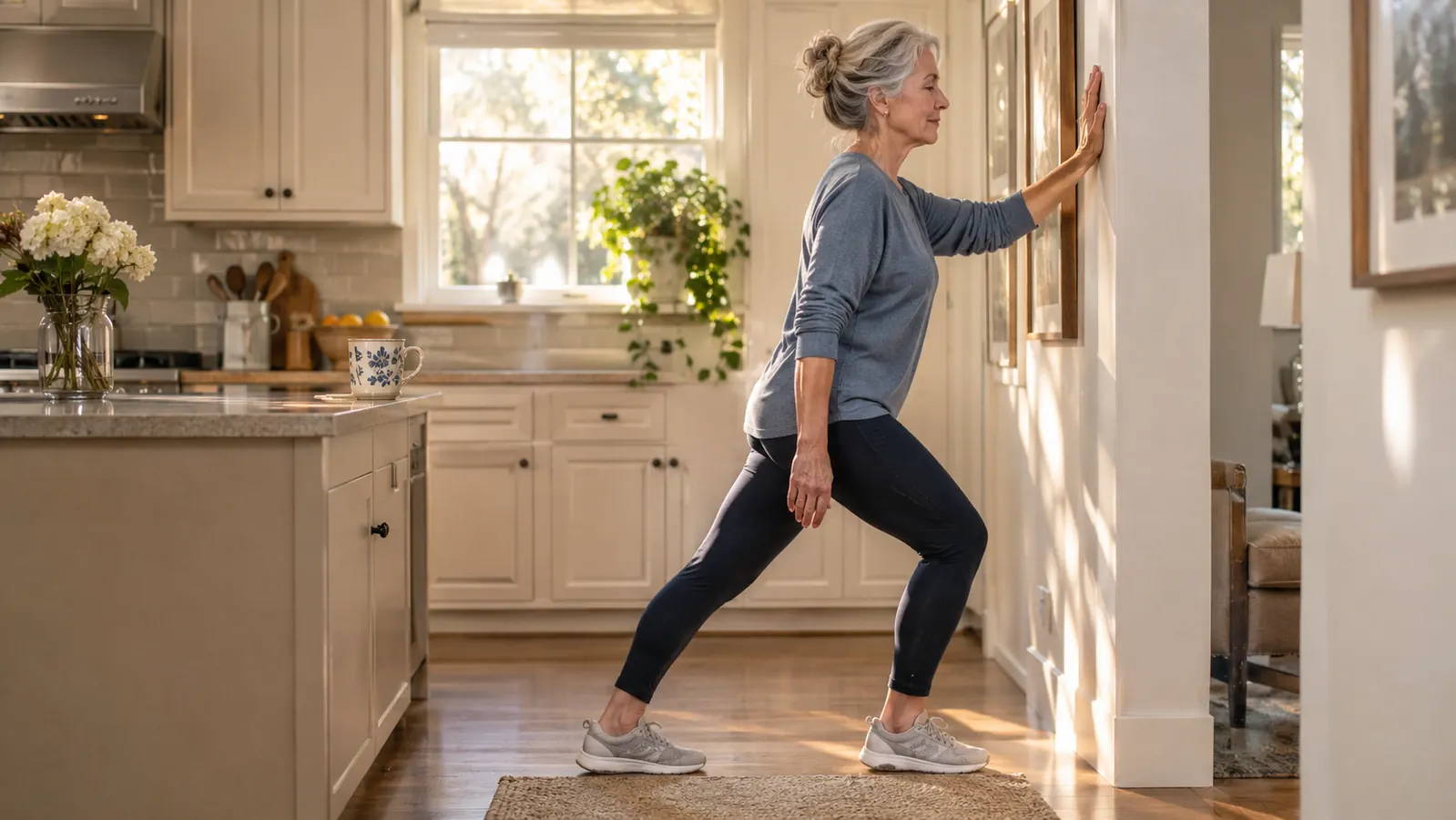
My doctor diagnosed plantar fasciitis that spring and sent me to a physical therapist for six visits. Over the next few months I collected a small arsenal. A United Ortho night splint for the bad weeks. PowerStep Pinnacle insoles in my work sneakers. A BESKAR roller by the couch so I would actually use it during the news. OOFOS slides as house shoes, because our floors are tile throughout and I had been walking on them barefoot for forty years. And the two stretches the therapist taught me, a calf stretch and a towel stretch, which I still do most nights.
All of it helped during the day. The insoles took the edge off the concrete. The roller loosened things after a long shift. The stretches kept my calf from turning into rope. None of it touched the morning, because the morning problem happens while you sleep. Eight hours with the foot pointed down and the plantar fascia shortened, then the first step pulls it like a cold rubber band.
The therapist had mentioned night splints in passing. A brace that holds the foot at an angle overnight and keeps a gentle stretch on the fascia and the Achilles tendon so it doesn't tighten up. I nodded and did nothing about it for two months, because the idea of sleeping in a brace sounded like something that happens in a hospital. Then I had a week in July where every single morning was the sharp version, and I got tired of being brave about it.
The one I ended up with was the United Ortho adjustable leg support brace. It fits either foot, which mattered to me because my left heel has its own mild complaints on long days. I measured my foot the way the listing tells you to instead of guessing at the size, and I ordered the Large.
The brace adjusts from 10 to 90 degrees of dorsi-flexion. I found my number by sleeping badly at every other setting first.
If your worst ten minutes are the first ten out of bed, start there
The United Ortho brace holds the stretch overnight, so the first step in the morning isn't the whole day's pain arriving at once. It adjusts from 10 to 90 degrees and fits either foot.
Amazon Check Today's Price on Amazon →The first night was a negotiation. I set the flexion straps too tight, somewhere near the aggressive end of that 10 to 90 degree range, and my calf cramped at two in the morning and I took the thing off in the dark. The second night I backed it off. By the fourth night I had landed in a middle setting that stretched without arguing. That is the honest version of how this works: nobody hands you your number.
What surprised me was the comfort. The liner is foam and it stayed cool, which I had not expected in a Florida bedroom in August. The calf strap and the ankle strap are padded, so nothing dug in. The brace itself is not light, about 1.2 pounds, and it is bulky enough that I plan my middle of the night trips down the hall around putting it back on. I am not going to pretend that part is fun.
Ray called it my ski boot. He also stopped asking how the heel was every morning, because he could tell by whether I was holding the doorframe. Biscuit the cat was suspicious of it for about a week and then decided it was furniture.
I wear it on the bad weeks, not every night. That is the arrangement that has held for me. On a good stretch I will go four or five nights without it and be fine. When I have had a long shift, or when Ray and I have walked the bayfront path and I have overdone it, I put it back on, and the next morning is a dull ache that loosens in a couple of minutes instead of a stab.
I want to be clear about what this did and did not do. It did not cure anything. I still do the stretches. I still wear the insoles in my work sneakers and the slides on the tile. The splint works on the eight hours I am not awake to manage, and that turned out to be the eight hours I was losing.
What I'd Tell You If We Were Sitting at My Kitchen Table
I would tell you to see a doctor or a podiatrist first, especially if the pain came on suddenly, or is severe, or is not improving after a few weeks of sensible effort. I would tell you that the stretches are not optional and no purchase replaces them. And I would tell you that if your pain is at its worst in the first steps out of bed, the overnight hours are the part of your day you have not tried to fix yet. The United Ortho brace is not a cure, and it is not comfortable the way a good pair of shoes is comfortable. It is a stretch you can sleep through. For me that was the missing piece, and it cost me less sleep than the pain did.
The eight hours you're not awake for are still eight hours
Adjustable from 10 to 90 degrees, foam liner, padded calf and ankle straps, fits either foot. Start at a gentle setting and give it a week before you decide.
Amazon Check Today's Price on Amazon →