My right heel started hurting in early 2025, about three weeks after I took a part-time job as a cashier at a garden center. Concrete floor, a mat that had seen better days, and me standing in one spot for hours at a time. The first steps out of bed in the morning were the worst of it, a sharp pull right at the bottom of the heel that made me grab the dresser and wait. My doctor diagnosed plantar fasciitis that spring and sent me to a physical therapist for six visits. I still do the stretches he taught me.
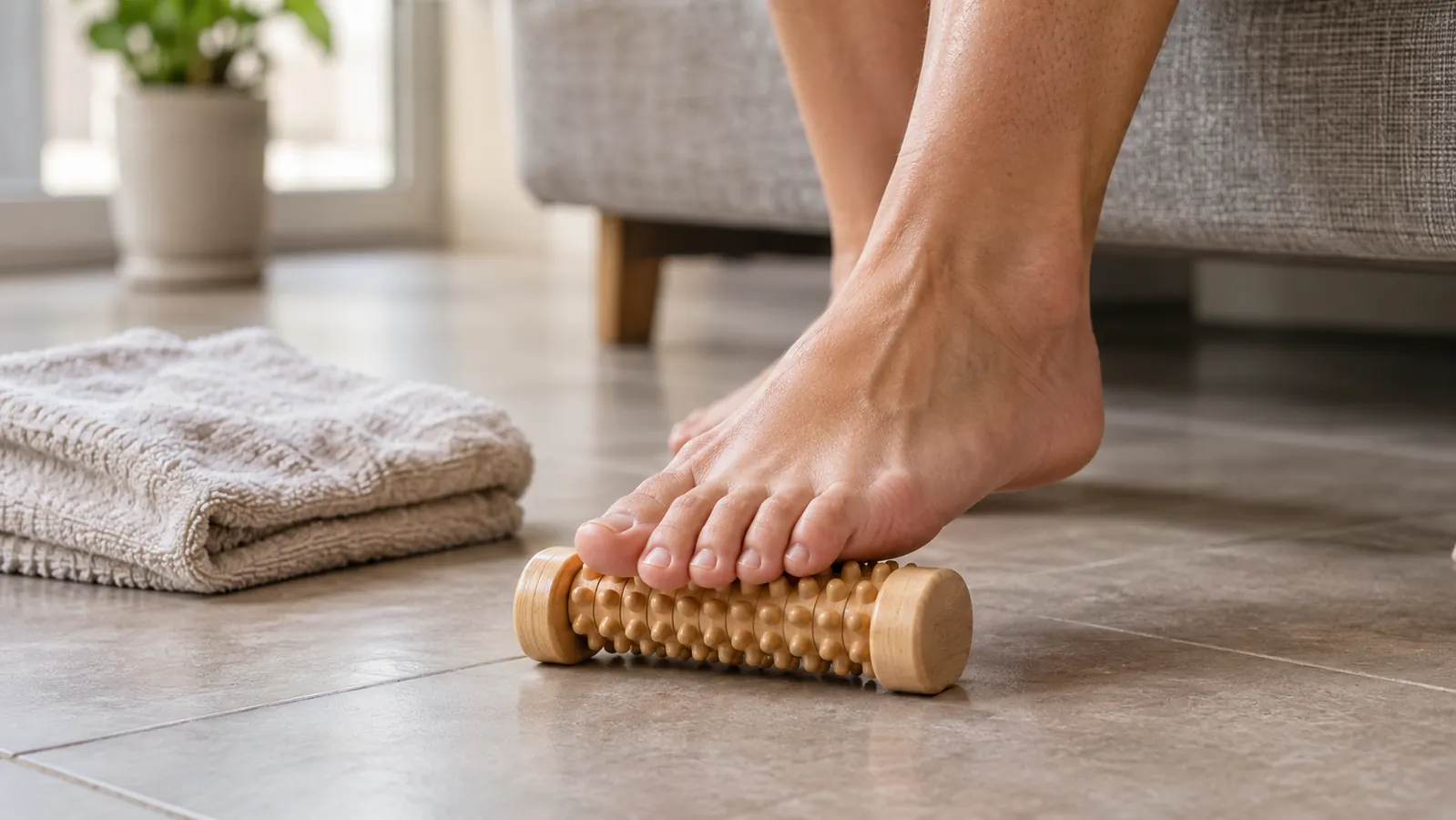
The stretches helped, and so did better insoles. But the thing I reach for most is the smallest thing I bought all year: a BESKAR foot roller that lives on the tile next to my couch. It is six inches long, four ounces, manual, with nothing to plug in or charge. I roll my right arch with it most mornings and again after a long sit. It is not a cure and I will not pretend otherwise. What it is, for me, is the difference between a rough first hour and a manageable one.
Four ounces, no cord, and it lives where you sit
The BESKAR roller is manual, portable, and shaped to follow the curve of the arch. That is the entire pitch, and for a heel that hurts on the first step of the day, it is enough.
Amazon Check Today's Price on Amazon →Before You Start: Three Things That Decide Whether Rolling Helps
Pick a spot where you will actually do it. Mine is the two feet of tile between the couch and the coffee table, because that is where I sit down at the end of the day. The roller is light enough to scoot around with your foot, and if the tile feels slick, a folded hand towel underneath will hold it in place. It is not water resistant, so keep it out of the shower and wipe it down with a damp cloth instead of rinsing it under the tap.
Decide what a session looks like before you begin, or you will overdo it. Two to four minutes per foot, slow, is plenty. On a bad day, one minute is plenty. The surface is built for acupressure, which means it is doing the work whether you press hard or not. Bearing down until it hurts is how people bruise their arch and give up by Thursday.
And be clear with yourself about what you are trying to change. Rolling will not rebuild a damaged fascia. What it does is loosen the tissue and get blood moving before you put weight on the foot. That is why the timing matters more than the pressure, and why the day you start is less important than the second week.
Step 1: Put the Roller Under Your Arch, Not Under Your Heel
Sit in a chair with both feet flat on the floor and slide the roller under your right arch, roughly where the strap of a sandal would cross. Not under the heel pad itself and not out at the ball of the foot. The plantar fascia runs from the heel to the ball, and the arch is where you can actually get at it. The roller is shaped to follow that curve, so the middle of it sits under the highest part of your arch while the ends rest behind and in front.
Keep your knee bent and your foot flat to start. If your feet are still half asleep from sitting, give them a minute before you roll. I learned that one the hard way. Rolling a numb foot does nothing except make you flinch, and flinching is how you end up pressing too hard and quitting.
Step 2: Roll Slow and Light for the First Two Minutes
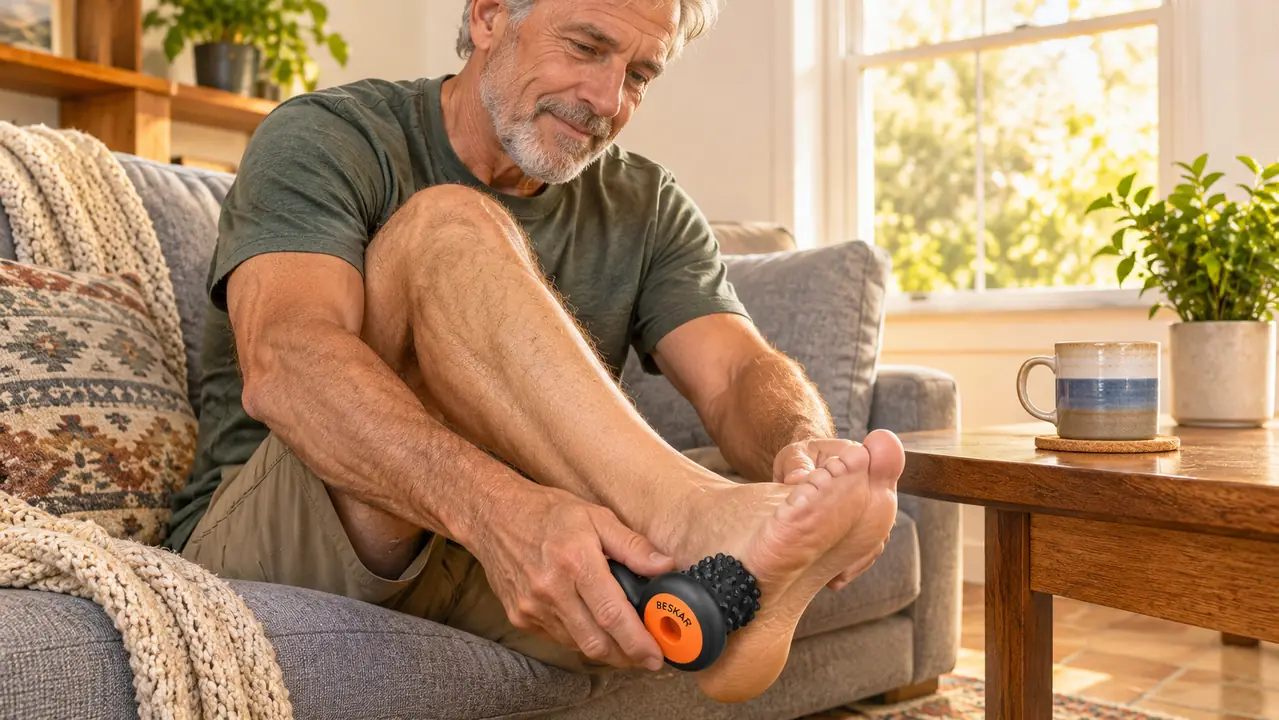
Roll from just behind the ball of the foot to just in front of the heel, back and forth, and count to three on each pass if you need a pace. Slow is the whole point. The BESKAR roller is manual, so the only speed it goes is the speed you give it. That sounds like a limitation. In practice it is the reason I stuck with it. A ball rolls away from you and a frozen bottle rolls toward the baseboard, but this one stays where your foot puts it. I tried a tennis ball first, back in the spring, and spent more time chasing it under the couch than rolling. I tried a frozen water bottle next, and it was cold enough that I quit after a minute and a half. Neither one was bad. They were both just enough hassle that I found reasons not to bother. The roller has no such excuse, which is the only reason it is still next to my couch a year later.
When you find a tender spot, stop on it and let your foot rest there for a few seconds, then keep going. That is the acupressure part working. It should feel like a firm thumb pushing into the arch, not like a spike. If you are holding your breath or gripping the arm of the chair, you are pressing too hard.
Step 3: Work the Length of the Arch, Then the Spot in Front of the Heel
After the first two minutes, change the angle. Turn your foot slightly inward and roll the inner band of the arch, then turn it slightly outward and do the outer band. Small movements, same slow pace. The BESKAR roller is about two and a half inches across, so you can get it into the side of the arch without fighting your own ankle to do it. I do this part with my foot turned maybe twenty degrees, no more. The first time I tried it I turned my whole leg instead of my foot, and my knee let me know about it that evening on the bayfront walk. Now I keep my heel planted and rotate from the ankle. The inner band is the tender one for me. The outer band almost never is, but I do it anyway, because my physical therapist said even work on both sides keeps the foot from making up for the sore spot somewhere else.
Then come back to the spot just in front of the heel, the one that hurts when you take that first step out of bed, and spend thirty seconds there. That spot is where most of my pain lived. I do not grind on it. I rest on it, breathe, and let the tissue give a little. Some mornings it is not tender at all and I move on. Other mornings it is the only place I roll.
Two minutes a foot, twice a day, is the whole routine. The mornings I skip it are the mornings I limp to the bathroom.
Step 4: Stretch the Calf Right After You Roll
Rolling loosens the bottom of the foot. It does not do much for the calf, and in my case the calf was half the problem. My physical therapist put it this way: a tight calf pulls on the heel from above, so you can roll your arch faithfully every day and still get the same first-step pain if the calf never lets go. He had me stand at the wall in the clinic on my second visit and pointed out that my right heel came off the floor about an inch before I felt anything at all. That was the whole diagnosis in one move. Three visits later I could keep it down. It still tightens up on days I am on my feet at the register for six hours, and it still takes the full thirty seconds before it feels like it has let go.
So after I roll, I do the wall stretch. Both hands on the wall, right foot back, heel flat on the tile, hold for thirty seconds, three times. On the weeks when the heel is angry, I do the towel stretch instead. Sit on the couch, loop a towel around the ball of the foot, pull gently until you feel the pull under the arch, hold, release. Neither one takes long, and neither one costs anything.
Step 5: Put It at the Two Times of Day That Matter
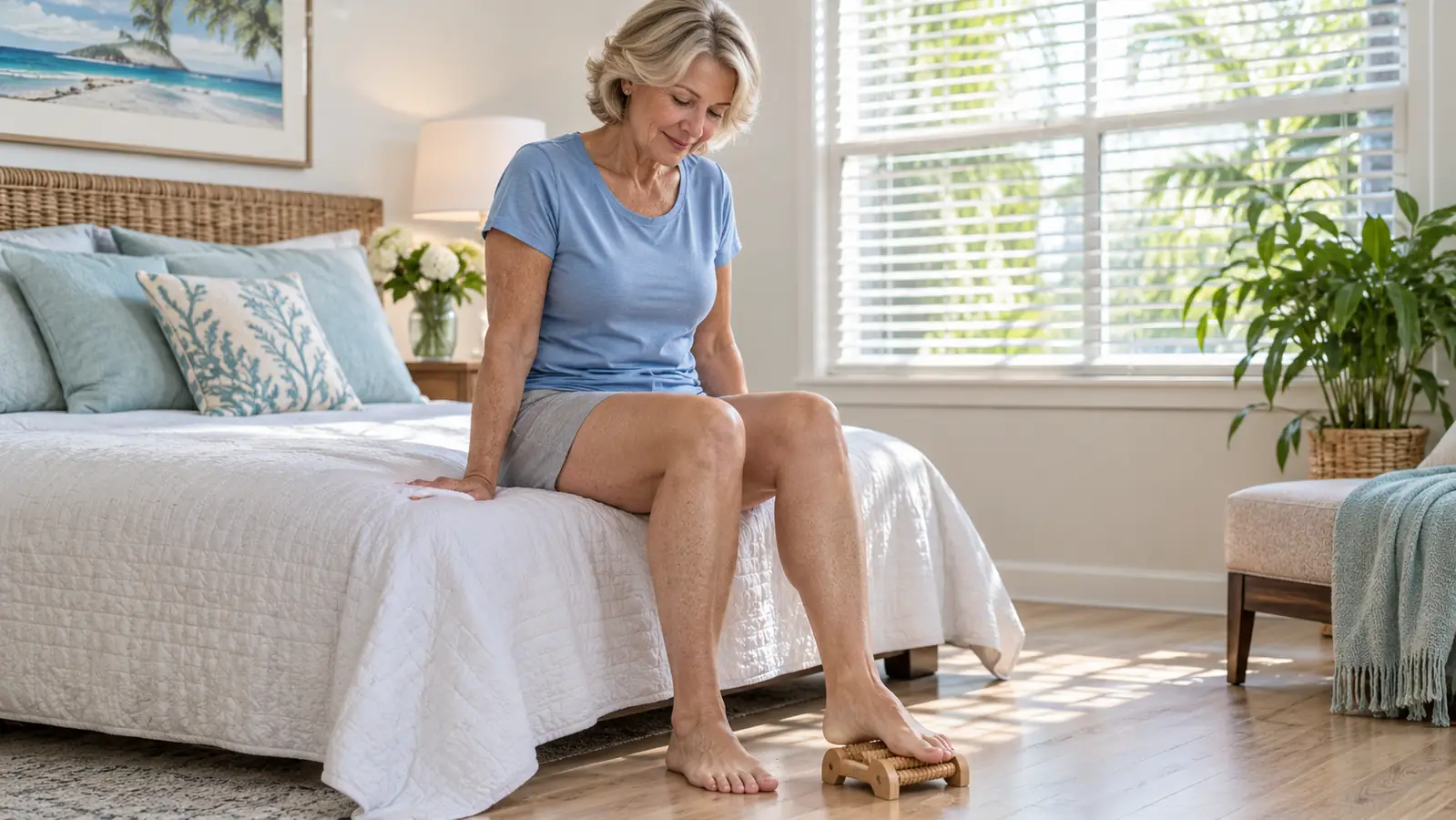
Morning is the one that counts. Before my feet hit the tile, I sit on the edge of the bed and roll the right arch for about a minute. It is not a treatment. It is a warm-up, and it takes the worst edge off that walk to the bathroom. On the mornings I forget, I know it by the time I reach the hallway.
The second time is after sitting. A long lunch, a movie, a shift at the register where I barely moved. The fascia stiffens when the foot has been still for a while, and a couple of minutes of rolling before I stand up saves me the first five limping steps. That is why the roller lives by the couch and not in a drawer. If it is out of sight I do not use it, and if I do not use it, nothing changes.
What Else Helps
The roller is one piece of a routine, not the routine itself. What has helped me most, in order: the PowerStep Pinnacle insoles in my work sneakers, the United Ortho night splint on the right foot during bad weeks, and a pair of OOFOS slides I wear on the tile at home instead of going barefoot. My house is tile from the front door to the back porch. That is normal in Florida and it is rough on a heel. The insoles were the second thing I bought, after the splint, and they took about a week of getting used to before my arch stopped complaining about the extra height. I put them in the one pair of supportive walking sneakers I wear to the garden center and I have not taken them out since. The splint comes out on bad weeks only, which for me is maybe one week in four. It is not comfortable. It works, and that is the trade.
The BLITZU compression sleeve goes on for long shift days, and it helps more with the swelling by the end of the afternoon than with the morning pain. Ray and I still walk the bayfront path most evenings, about two miles when it is not too hot, and I stretch afterward. Cutting out the walking entirely made things worse, not better. I just stopped doing it on concrete.
Give it time, too. The first two weeks of rolling, I could not tell you it was doing anything. What changed was the morning walk to the bathroom, which went from a stab to a dull ache somewhere around the third or fourth week. If you are looking for a moment where it clicks, there is not one. There is just a month where you realize you stopped bracing yourself before you stand up.
And the plain advice, which I would give my own daughter: if the pain is severe, if it comes on suddenly, or if it has not improved after a few weeks of the boring stuff, go see a podiatrist. Plantar fasciitis is the common answer, not the only answer. Mine has gone from a sharp stab most mornings to a dull ache that loosens in a few minutes. That took months, not days, and it still has bad weeks.
Start with the morning, then add the rest
Two minutes before your feet hit the floor, keep it light, and give it a week before you decide anything. The BESKAR roller is manual, portable, and shaped to the arch, which is all this particular job needs.
Amazon Check Today's Price on Amazon →