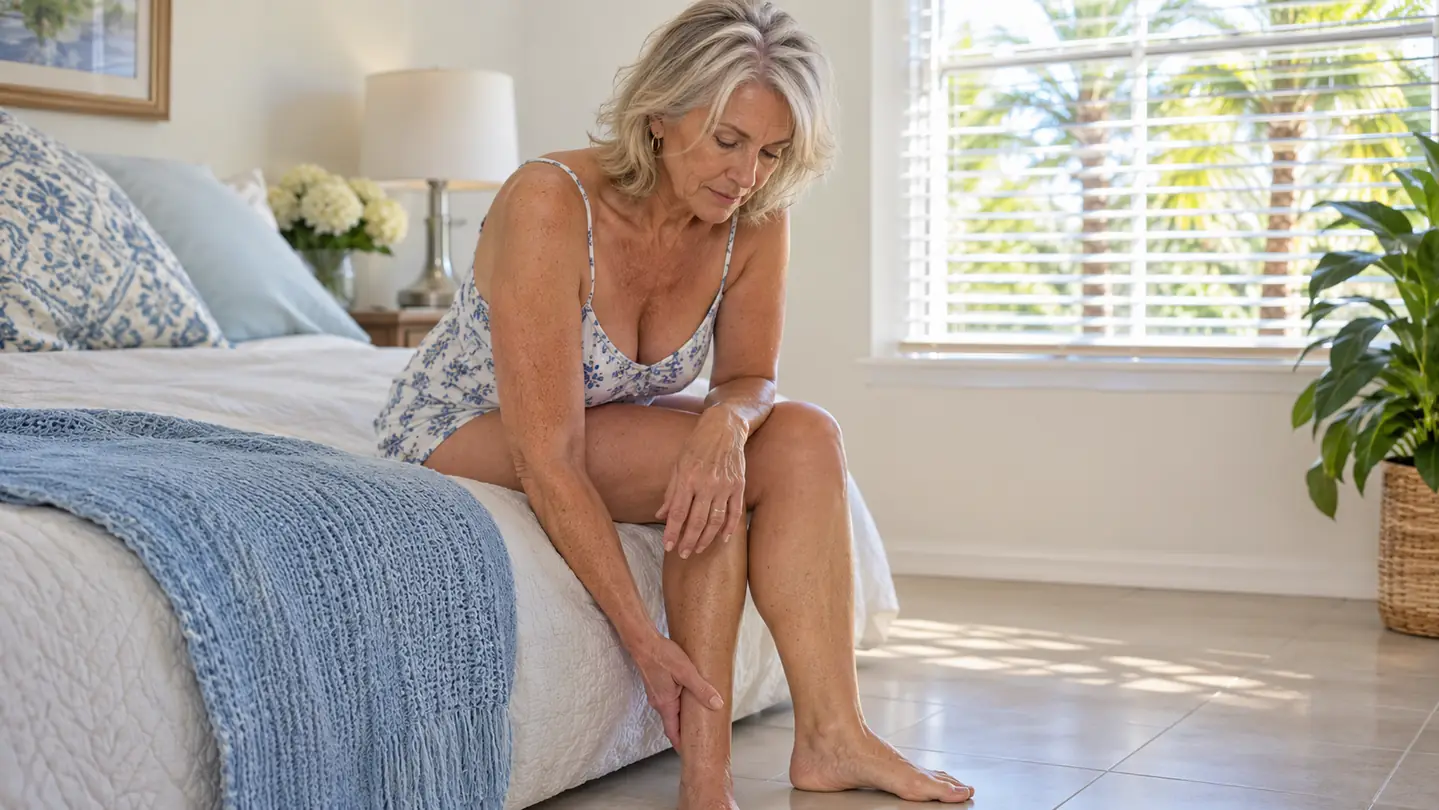
The first thing I do most mornings is sit on the edge of the bed and lower my right foot slowly, like I am testing ice. That is what plantar fasciitis did to me in early 2025, and it started maybe a month after I took a part-time job as a cashier at a garden center on the Gulf Coast of Florida. Three mornings a week. Six hours on a concrete floor. By the time I got home my heel felt like a bruise I could not rub out.
I tried what people told me to try. I rolled my arch over a frozen water bottle until the bottle sweated through a dish towel. I used a tennis ball, then a lacrosse ball, which worked about as well as anything but skidded off across the tile every few minutes. I did the calf stretches and the towel curls my physical therapist gave me over six visits, and I still do them. What I wanted was something I could keep by the couch and use while Ray watched the evening news, without getting down on the floor after a ball that rolls under the recliner. In July I bought the BESKAR foot roller. This is what several months of steady use has actually been like.
The Quick Verdict
A four-ounce manual roller that does one job well and asks nothing of you but five minutes and a place to sit. It eased my morning heel tightness. It did not cure anything, and I still use it most nights.
Amazon Check Today's Price →The four-ounce roller I reach for before my shoes go on
Manual, portable, and small enough to live in a basket beside the couch. Five minutes in the morning, five at night. That is the entire routine.
Amazon Check Today's Price on Amazon →How I've Used It
My routine is not fancy. The roller lives in a basket beside the couch, next to the remote and a pair of reading glasses. Most evenings I roll my right arch and heel for five to seven minutes while the news is on, then switch and give the left foot a minute or two, because the left one aches on long days too, just not the way the right one does. On bad mornings I sit on the kitchen stool with it before I put my sneakers on, while the coffee is still brewing. That is it. No timer, no program, no counting.
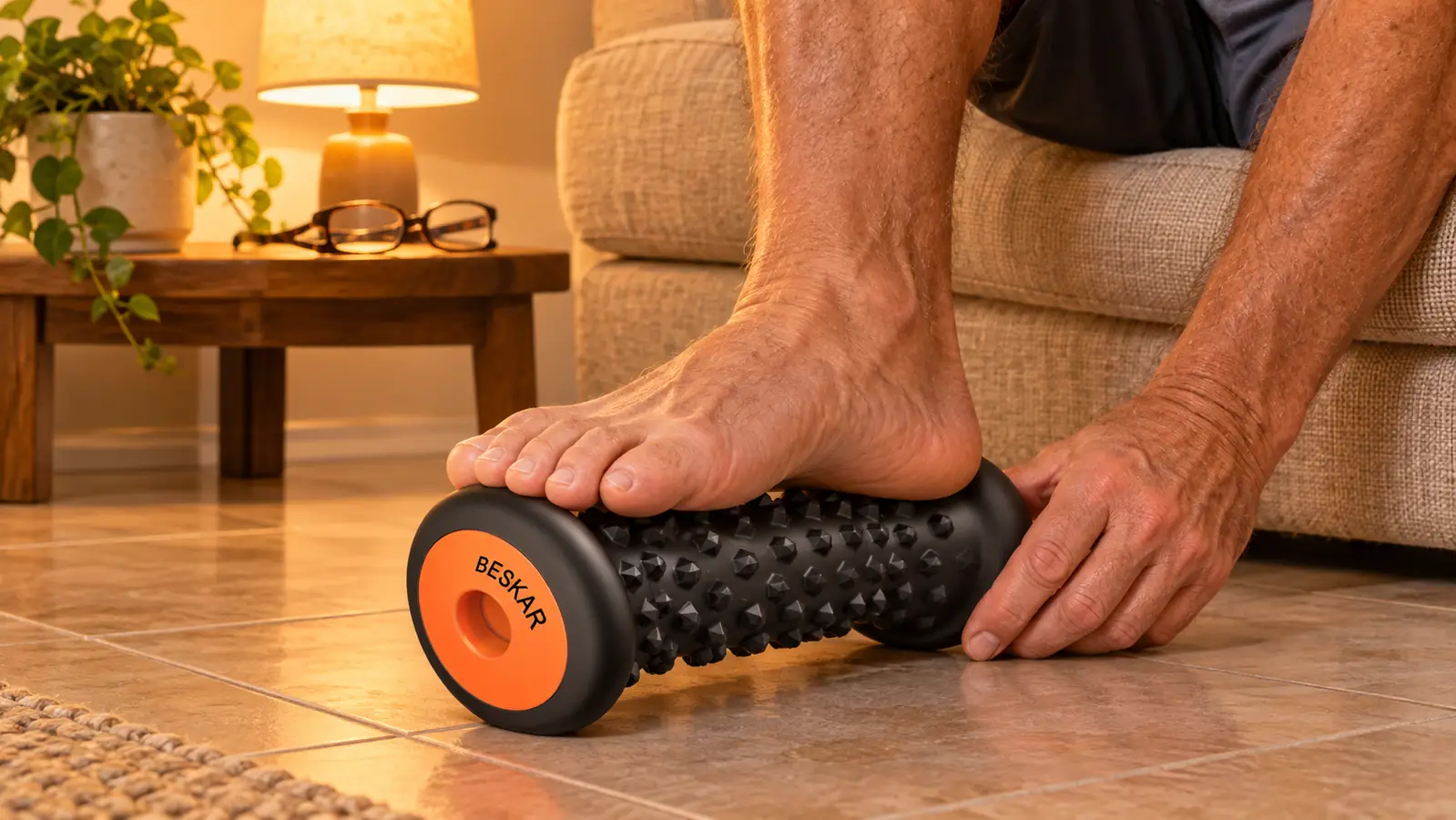
Seated is how I started, and seated is still how I do it most of the time. You put the arch of your foot on it and roll from the ball of the foot back toward the heel, slow, pressing down as much as feels useful. Standing and putting more weight on it works too, but that is a different sensation and I only do it when the tightness is stubborn. The shape follows the curve of the arch, so it settles under the foot instead of fighting it, and the pressure comes from how hard you lean and nothing else. There is no setting to adjust, which I minded at first and now consider the point.
Several months of near-daily use has not changed it. It is four ounces and six inches long, so I can drop it in a tote bag and use it in the break room before I drive home, which I did a lot in the first two months. The one real annoyance is that it is not water resistant, so I cannot rinse it. I wipe it with a damp cloth and a little soap once a week and let it air dry, which takes a minute and no more.
What It Actually Is, and What It Isn't
The BESKAR foot roller is a manual massager. That is worth saying plainly, because on Amazon it sits next to a long row of electric foot massagers with heat and vibration, and this is not that. There is no cord, no battery, no motor, nothing to charge, and nothing electronic to stop working in a year. It is a small shaped roller, four ounces, six inches long and about two and a half inches across, that you press your foot onto. The listing calls it an acupressure reflexology roller, and what that means in practice is that it presses into the arch rather than gliding over it.
That pressure is the whole mechanism. Five minutes of it loosens the tight band along the bottom of my foot the way the frozen bottle did, except I am not soaking a dish towel and I am not crouching on the kitchen floor at ten at night. What it does not do is treat the cause. My plantar fasciitis is a calf tightness problem and a footwear problem and a too-many-hours-on-concrete problem. A roller does not fix any of those three. It buys me a looser foot before I stand up, and after a while I decided that was worth having.
What Changed Over Six Months
I want to be careful here, because I have read reviews that make it sound like a switch flipped and I do not want to sell that. What changed is the first-step pain. In the spring, stepping out of bed was a stab that made me say something under my breath before I was even properly awake. Most mornings now it is a dull ache that fades after a few minutes of walking around the house. Is that the roller? Some of it. The insoles are in that too, and the night splint on bad weeks, and the fact that I stopped walking around on tile in bare feet.
I still have bad weeks. Two weeks ago I worked four shifts instead of three because a seasonal shipment came in, and by Thursday my heel was talking to me again by mid-afternoon. What I noticed is that the roller is most useful on exactly those days, when the tissue is angry and I want to loosen it before bed rather than lie there waiting for morning to find out how bad it is going to be.
The other thing I noticed is that the good weeks are the ones where I keep doing it. It is easy to stop when the heel feels fine, and then two weeks later I am back to wincing on the bedroom floor. I have made the roller part of the evening the way brushing my teeth is part of the morning, and the streak matters more than the intensity. Ten lazy minutes across a week beats one serious session on a Sunday.
And a plain warning. If your pain is severe, or it came on suddenly, or you have numbness or tingling in the foot, put the roller down and go see somebody. Mine was diagnosed by my primary care doctor in spring 2025, and I did six visits with a physical therapist, and I would not trade those six visits for any gadget on the market. This is a tool that sits inside a routine. It is not a replacement for a professional's advice, and I would not want anyone reading this to think otherwise.
The Parts That Annoy Me
Three complaints, and none of them are dealbreakers. First, it is not water resistant, so no rinsing it in the sink and no leaving it out on the porch where it rains sideways in July. Wipe it and move on. Second, four ounces is light enough that it slides a little on smooth tile if I press at an angle, so I keep a small rubber mat under it now. Third, it is small. It fits my foot and it does not fit my calf, and my calf is half my problem.
There is no adjustment on it at all. Pressure is entirely a matter of how much weight I put down, and relief is entirely a matter of whether the shape happens to sit where your tightness is. Mine sits right along the arch and into the heel, which is where I need it. If your pain lives somewhere else, or if you have a high arch that wants a different curve, this may not land the same way for you. There is no dial to turn and no way to make it press in a different spot.

Roller vs a Lacrosse Ball
I used a lacrosse ball for four months before this, so I have a fair comparison. The ball is harder and it digs deeper, and on a really stubborn knot in the middle of the arch nothing beats it. But it rolls. On tile it goes skittering under the couch, and on carpet it sinks in and does almost nothing. Getting down on the floor to use it was its own small project, and by eight in the evening I am not getting down on the floor for anything.
The roller stays where I put it. The shape holds it under the arch, so I can sit upright in a chair and read while I use it, which I could never manage with the ball. It is also gentler, which sounds like a downside and is not one, because I can use it twice a day without bruising the bottom of my foot. If I had to keep only one, I would keep the roller, and I say that as somebody who still keeps the lacrosse ball in a drawer for the days when gentle is not enough.
How It Fits With Everything Else I Use
The roller is one of five things I do, and I would be lying if I said it was the most important one. My work sneakers have PowerStep Pinnacle insoles in them and that was the single biggest change I made all year. On bad weeks I wear the United Ortho night splint on the right foot, which is miserable for about a week and then it starts to work. My house shoes are OOFOS OOahh slides, because our whole house is tile and barefoot on tile is how I got into this mess. On long shift days I put on a BLITZU compression sleeve. The BESKAR roller is the one I use most often, for the simple reason that it takes the least effort.
That is really the case for it. The insoles needed a purchase and a break-in period. The splint costs me sleep for the first week. The sleeve is a whole production to get on before a shift. The roller takes five minutes and lives by the couch, and when I am tired and do not want to do any of it, I will still roll my foot. Five minutes of rolling beats a perfect routine I skip.
My order in the morning goes like this. Splint off, sit on the edge of the bed, roll the right foot for two or three minutes, stand up slowly, walk to the bathroom. Those two or three minutes have done more for the first-step pain than anything else I have tried, because it warms the tissue before I load it. Ray has started doing his own version with a golf ball, which is his business.
What I Liked
- Four ounces and six inches, so it goes in a tote bag or a nightstand drawer
- Manual, with nothing to charge and nothing electronic to fail
- The shape follows the arch, so it settles under the foot instead of sliding out
- Five minutes seated is enough to loosen a tight morning arch
- Several months of near-daily use and mine shows no wear
Where It Falls Short
- Not water resistant, so it gets wiped rather than rinsed
- No way to adjust the pressure except how hard you lean
- Light enough to slide on smooth tile when you press at an angle
- Small surface, so it works the foot and never the calf
- It loosens tissue and does nothing about the cause
Most mornings now it is a dull ache that fades after a few minutes, not the stab that made me say something under my breath. That is not a cure. It is a better morning, and I will take it.
Who This Is For
This is for someone whose heel is worst on the first steps out of bed, who works on their feet or has just started walking for their health, and who wants something they can use sitting down in the evening. It suits people who already have the boring pieces in place, the supportive shoes and the stretches, and want a small tool to loosen the arch before they stand up. It suits people who do not want one more thing in the house that needs charging.
And one more thing for the people who are where I was in February. The roller is not going to be the thing that fixes you, and that is fine. It is the thing you will actually do, twice a day, for five minutes, without rearranging your whole evening around it. In my experience that matters more than the perfect tool you use twice and then quit.
Who Should Skip It
Skip it if you want heat or vibration, because this has neither and no amount of wishing will add them. Skip it if the pain is in your calf or your Achilles, because it will not reach either one. Skip it if your foot is swollen or bruised or numb, or if the pain arrived suddenly, and go get it looked at instead. And skip it if you are expecting the roller alone to fix you, because for me it was maybe the fourth most important change I made, behind the insoles, the shoes, and the six visits with a physical therapist. What it is, is a small manual tool that earned its place in the basket beside my couch. What it is not, is a cure.
Five minutes on the couch, before the shoes go on
Manual, portable, four ounces, and mine has held up to months of nightly use without a mark. If your mornings start with a careful step onto a hard floor, this is a reasonable place to start.
Amazon Check Today's Price on Amazon →